





Is Eyelid Surgery Safe? What to Expect and How Long Results Last
By Zain Ashraf
/ 6.1.2025

Nipple enhancement is a plastic surgery procedure that alters the size and/or appearance of the nipples. It can be performed on both men and women and has become increasingly popular in the recent years.
There are several types of nipple surgery, including Nipple Reduction, Inverted Nipple Correction, Nipple Reconstruction , Nipple surgery can also be performed to reduce the size of the areolas (the darker pigmented areas around the nipples) known as Areola Reduction. Nipple surgery can be performed on its own but often is combined with some type of Breast Surgery.
Reasons for Nipple Surgery May include:
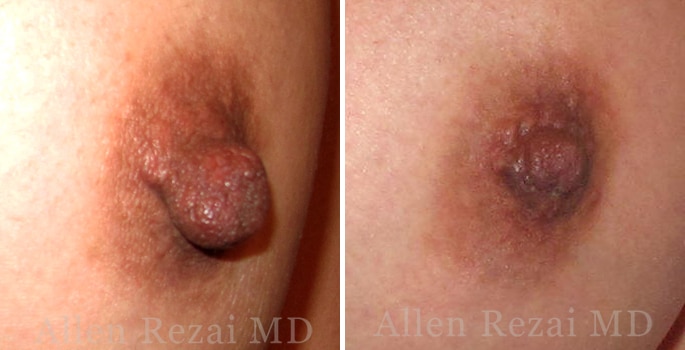
To view before and after photos, please refer to the gallery page: Nipple Surgery Before & After
Irregular or enlarged Nipples, often protruding through clothing may lead to pain and irritation and is commonly known as “Jogger’s Nipple”. This condition may affect both men and women.
In women, nipples may become long, dark or sometimes wide in girth a result of prolonged breastfeeding or part of the normal development of the breast. With nipple reduction surgery, nipples can be reduced in length and/or width. Following nipple reduction surgery, you can expect your nipples to project normally and be proportionate to the size of your breasts.
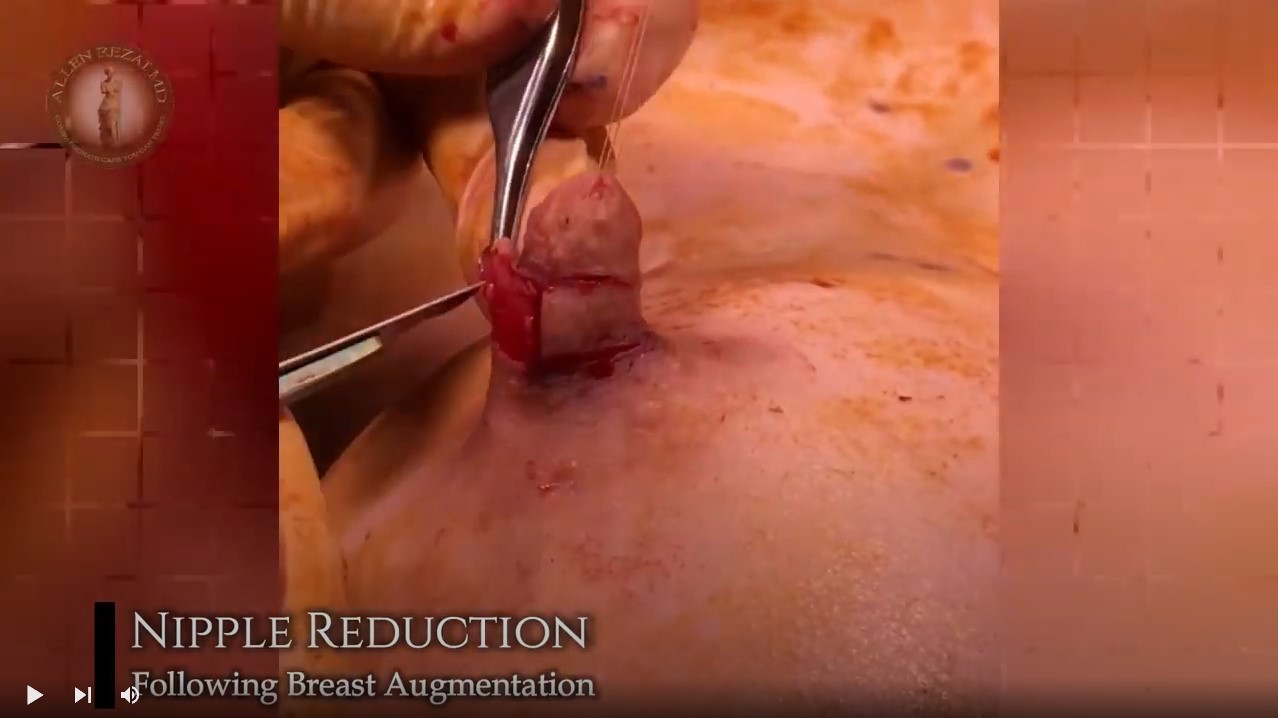
Your options will be discussed with you during your consultation.[/dt_sc_toggle][/dt_sc_toggle_group]
Inverted Nipple means that the nipple lies flat against the breast or is “turned-in”. Some people are born with this condition, whereas others may develop them during puberty. Inverted nipple is caused by the pull of connective tissue behind the nipple forcing it inwards, instead of naturally protruding outwards. In extreme cases inverted nipples can affect a woman’s ability to breastfeed. Nipple inversion can occur in both men and women, although it is more commonly seen in women.
There are various degrees of nipple inversion. These include:
Mild Inversion – The nipples are intermittently inverted but can evert in response to temperature or stimulation. With mild inversion the potential to breastfeed is generally not affected following corrective surgery.
Moderate Inversion – The nipples are constantly inverted and if they do evert, return almost immediately. The potential to breastfeed following corrective surgery can be reduced as surgery often affects the milk ducts.
Severe Inversion – The nipples are severely inverted and by no means evert. Breastfeeding is typically not possible following correction surgery as milk ducts are in most cases divided to achieve the correction.
[/dt_sc_toggle][dt_sc_toggle title=”Treatment of inverted nipple”]
If you’ve had inverted nipples all your life, it is usually harmless, though they can sometimes make breastfeeding more difficult. If they occur later in life, they can sometimes be a sign of a medical condition (like breast cancer) and should be checked out.
Correction of inverted nipples involves increasing the nipple projection, making the appearance of the nipples and breasts more normal. The treatment required to correct inverted nipples depends on the severity of the problem. Many times, for individuals with mild nipple inversion, a temporary nipple piercing, or breast augmentation may improve the projection of the nipples. In more severe cases surgical intervention is necessary. The surgery involves incisions either at the base of the nipple, across the nipple, or around the areola to allow release of the connective tissue preventing the nipple from coming out normally. Scars are very small and concealed within the nipple areola region.
Surgery can be performed both under local or general anaesthetic. It is usually as day case surgery meaning you will be able to go home the same day as the procedure.
Inverted Nipple Surgery may not be a suitable option for everyone, that’s why a through consultation is an important initial step to discuss your options and all implications involved.
[/dt_sc_toggle][/dt_sc_toggle_group]
In some individuals, the areolas, the darker skin surrounding the nipples, can be asymmetrical, wide or protruding (Puffy), either since puberty, or as the result of pregnancy, weight loss/gain or previous surgery. Although there are no functional concerns, people may seek surgical intervention for aesthetic purposes.
Large areolas are typically associated with breast sagginess or stretching following a breast augmentation, but sometimes large and puffy or protruding areolas can be due to a congenital breast condition known as Tuberous deformity, in these cases breast reconstructive surgery including reducing the areola size and projection is required.
Areola reduction surgery normally includes one of the following three methods:
Depending on the goals with areola reduction surgery, your treatment options will be discussed with you during consultation.
Recovery after nipple surgery is very individual and will depend on the extent and type of procedure, but it is usually short. Some swelling and bruising may occur. During the healing process, you should be able to return to your normal daily activities just a few days after surgery. But any strenuous activities, or heavy lifting, should be avoided between 2-4 weeks. Wearing a good support bra for the weeks following the surgery is also recommended.
You may experience nipple hypersensitivity after surgery, but this is usually temporary. It is important to follow Mr Rezai’s pre and post surgery instructions. It may take few months for the final result to be apparent, so be patient.
[/dt_sc_toggle][dt_sc_toggle title=”Nipple surgery – possible risks & complications”]As with any surgery, there are always possible risks and potential complications. However, they are generally rare and if they occur are detected and managed during your post-operative follow-up. They include wound infection, bleeding, poor scarring and blood clots.
Other potential complications include:
Nipple Sensation – Changes in sensation (increase or decrease) can occur after any breast surgery but normal sensation should return over the course of 6 – 12 months. Permanent loss or alteration of sensation is rare.
Nipple Necrosis – If the blood supply to the soft tissues underlying the nipple/areola is compromised, partial or complete loss of the nipple/areola is possible. Smoking will greatly increase the risk of this occurring.
Breast feeding – As previously mentioned, some corrective nipple surgeries can reduce your potential ability to breastfeed.
Scarring – Incision lines are permanent, but scars will fade over time. If a person is prone to keloid (raised) or hypertrophic (wide) scarring, there isn’t much that can be done .
Longevity – The results of your nipple correction surgery will be long lasting but, over time factors such as childbirth, breastfeeding or hormonal factors will continue to affect the size and shape of your breasts and therefore possibly nipples, just as they did before surgery.
Depending on the type of Nipple surgery you will be having, Mr Rezai will discuss the possible risks and complications with you at consultation.[/dt_sc_toggle][dt_sc_toggle title=”Pre- & post-op instructions”]
[/dt_sc_toggle][dt_sc_toggle title=”Related procedures”]
[/dt_sc_toggle][/dt_sc_toggle_group]