




Is Eyelid Surgery Safe? What to Expect and How Long Results Last
By Zain Ashraf
/ 6.1.2025

Capsular Contracture or hardening is a breast implant related complication. The body forms a tissue capsules (scar tissue) around every breast implant, it is the body’s natural response to the placement of any foreign object as a protective measure. This capsule is normally soft and unnoticeable. It is only when that tissue capsule tightens/contracts and restricts the movement of the implant that the breast may develop capsular contracture. It should be noted that the implant itself has not changed or hardened, but the capsule squeezing the implant has caused it to feel as though it has. As a result, the breast may feel painful and hard, and depending on the severity of the contracture, the capsule may also affect the appearance or shape of the breast.
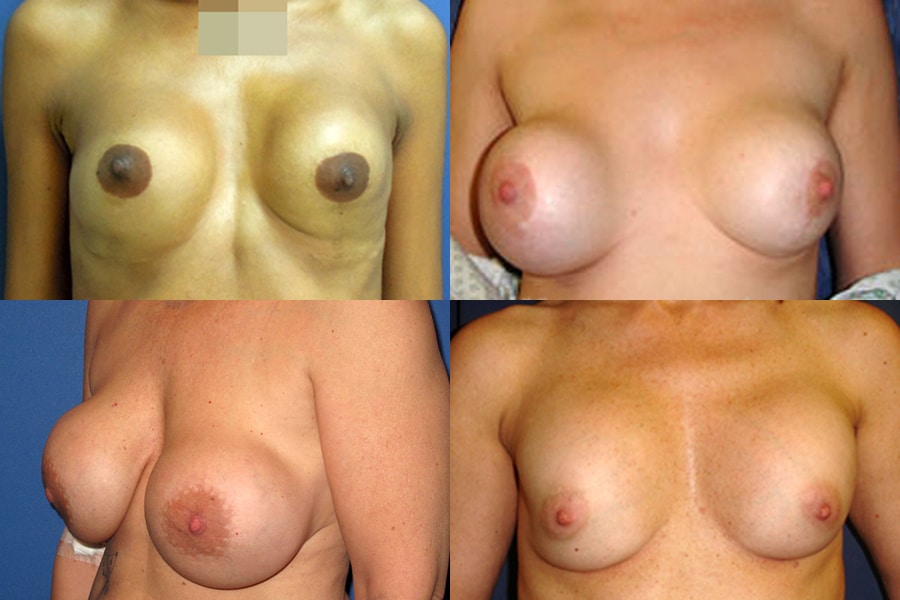
Capsular Contracture or hardening is a breast implant related complication. The body forms a tissue capsules (scar tissue) around every breast implant, it is the body’s natural response to the placement of any foreign object as a protective measure. This capsule is normally soft and unnoticeable. It is only when that tissue capsule tightens/contracts and restricts the movement of the implant that the breast may develop capsular contracture. It should be noted that the implant itself has not changed or hardened, but the capsule squeezing the implant has caused it to feel as though it has. As a result, the breast may feel painful and hard, and depending on the severity of the contracture, the capsule may also affect the appearance or shape of the breast.
The severity of capsular contracture is rated using a grading system known as The Baker System. It includes four types.
In Types I and II Capsular Contracture, I normally advise my patients to massage their breast using a specific compression technique to try and break the capsule and prevent it from developing further. Proper technique, adequate duration and frequency are key for this method to work.
In Types III and IV capsular contracture, treatment is usually surgical, in the form of capsulectomy, entire removal of capsule and the implant. Ideal scenario would be to allow the breast tissue to recover for a few months before re-augmentation. However, in most cases patients choose to re-augment at the same time as the capsulectomy procedure.[/dt_sc_toggle][dt_sc_toggle title=”Who’s at risk of developing capsular contracture?”]Prevention is key with all types of complications; however, we still do not know the actual causes behind capsular contracture, there are many discussions and opinions surrounding this matter, but none has been proven yet. Capsular contracture occurs in about 5 percent of women who undergo breast implant surgery. Predicting who will develop capsular contracture and when it will happen is nearly impossible. There are however several factors that may increase your risk. They include:
Sub-glandular Placement – You may be more likely to develop capsular contracture when your implants are placed over your muscle.[/dt_sc_toggle][dt_sc_toggle title=”Decreasing your risk of developing capsular contracture “]Factors that may decrease risk of developing capsular contracture are, textured implants, compression massage about 4 weeks after surgery, and submuscular placement of implants where indicated.
Each surgeon has their own recommendations, Mr Rezai will discuss his recommendations with you at your consultation and post-surgery follow ups.[/dt_sc_toggle][dt_sc_toggle title=”Treatment of capsular contracture”]The risk of developing capsular contracture is about 5%, it may occur on one side, both sides or not at all. In Milder cases of Capsular contracture (Types I & II) compression massage may help to break the capsular contracture or prevent it from developing further. Proper technique, adequate duration and frequency are key for this method to work.
Treatment for severe capsular contracture (Types III & V) includes implant replacement (with another brand or texture), or implant removal. Unfortunately, following implant replacement, the risk of capsular contracture reoccurring increases to 50%. The only treatment that guarantees the condition won’t return is the permanent removal of the implants and surrounding capsule. However, many times this is not the preferred option for patients.
A capsulectomy procedure, removal of the capsule, is always performed at the same time as breast implant removal or replacement. Sometimes patients request a total enbloc instead of a capsulectomy. Enbloc is when the implant and the capsule is removed at the same time with the implant still inside the intact tissue capsule. However, it should be noted that this may not be possible in some cases where the capsule is very thin or has become attached to the chest wall. Your surgeon will be able to discuss your options with you in more detail at your consultation.[/dt_sc_toggle][dt_sc_toggle title=”Pre- & post-op Instructions”]
[/dt_sc_toggle][/dt_sc_toggle_group]